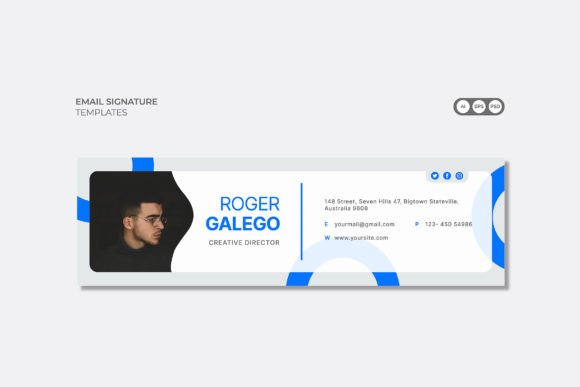
Simple Email Signature: A Versatile Design Template for Professionals
Every point of contact with a client or customer is an opportunity to reinforce your brand's identity and professionalism. While we often focus on websites, business cards, and social media profiles, one of the most frequently overlooked yet critical touchpoints is the email signature. A cluttered, inconsistent, or plain-text signature can undermine the credibility you've worked hard to build. This is where a well-crafted, simple email signature template becomes an invaluable asset, offering a clean, modern solution that streamlines communication and enhances your professional image.
Beyond the Basic Sign-Off: The Power of a Polished Digital Handshake
A Simple Email Signature is far more than just your name and phone number at the bottom of an email. It's a compact, digital business card that conveys essential information while reflecting your brand's aesthetic. The template described here is designed with multipurpose functionality at its core. Whether you're running a corporate agency, a creative studio, a startup, or managing personal projects, this asset provides a foundational structure that is both visually appealing and highly adaptable. Its clean lines and organized layout ensure your contact details, social links, and calls-to-action are presented without distraction, making it easier for recipients to connect with you.
The visual appeal of a simple, well-designed signature lies in its clarity and restraint. It avoids overwhelming the reader with excessive graphics or complex typography. Instead, it uses space, hierarchy, and subtle branding elements—like your logo and brand colors—to create a cohesive look. This approach not only looks professional but also improves readability across all devices, from desktop monitors to mobile screens. When your signature is consistent and polished, it subconsciously communicates that you pay attention to details, which builds trust.
Practical Applications Across Your Brand Ecosystem
The true value of a versatile design asset like this email signature template is its ability to integrate seamlessly into various aspects of your work. Its design is intentionally neutral yet professional, making it suitable for a wide array of applications beyond just email.
- Consistent Branding: Use the template's structure to ensure every team member in your organization uses a uniform signature. This strengthens brand recognition and presents a unified front to clients and partners.
- Marketing & Outreach: Incorporate a subtle call-to-action, such as a link to a new blog post, a current promotion, or a downloadable resource. This turns a simple sign-off into a gentle marketing tool.
- Freelancer & Agency Portfolios: For those in creative fields, the signature can be a mini-portfolio piece itself. A clean design demonstrates your understanding of layout and visual communication, reinforcing your skills before a client even views your work.
- Internal Communications: For larger organizations, standardized email signatures help maintain a professional appearance in internal correspondence, fostering a sense of corporate identity.
- Event Invitations & Follow-ups: When sending personalized invitations or follow-up emails after networking events, a professional signature adds a layer of polish and makes it easy for people to find your details.
This template isn't just an email accessory; it's a component of your broader brand identity system. The same principles of clarity, hierarchy, and brand alignment that make it effective can be applied when selecting fonts for your logo, website, or packaging. Think of it as a practical exercise in applying modern typography to a real-world communication problem.
Streamlining Your Workflow with Editable Design Assets
One of the most significant advantages of using a pre-designed template is the time it saves. Creating a professional signature from scratch requires knowledge of design software, an eye for layout, and an understanding of technical specifications like file formats and color modes. This package eliminates those hurdles by providing a ready-to-customize solution.
The inclusion of AI, EPS, and PSD files means you can work in the software you're most comfortable with, whether that's Adobe Illustrator or Photoshop. The files are layered and well-organized, which is a crucial feature for easy editing. Instead of digging through a jumbled mess of layers, you can quickly locate the text elements, logo placeholder, and social media icons to make your changes.
Furthermore, the use of Smart Objects in the Photoshop file is a game-changer for efficiency. This feature allows you to update your logo or profile picture in one place, and the changes will automatically apply throughout the design, maintaining perfect consistency. The RGB color mode with 300 DPI ensures the signature looks crisp on screen, while the instructions for easily changing colors via CMYK values in swatches show foresight for any potential print needs, though its primary use is digital.
For anyone who has ever struggled with matching typography across platforms, the note to download the specified fonts before opening the files is a helpful reminder. It ensures the design renders exactly as intended, preserving the careful typographic choices made by the original designer. This attention to detail in the asset's packaging speaks to its quality and the creator's understanding of a designer's workflow.
Making It Your Own: Tips for Customization and Pairing
While the template provides an excellent starting point, its real power is unlocked through thoughtful customization. Here’s how to adapt it effectively for your brand:
- Align with Your Brand Palette: Use the easy color-changing feature to input your exact brand hex codes or CMYK values. This simple step is the fastest way to make the signature feel uniquely yours.
- Choose Typography Wisely: The template likely includes a clean sans-serif or modern serif font. If you change it, ensure the new typeface aligns with your brand's voice. A professional services firm might opt for a sturdy serif, while a tech startup might prefer a geometric sans-serif. Always prioritize readability—avoid overly decorative scripts for essential contact information.
- Test Font Pairings: If your brand uses multiple typefaces, consider using one for your name (perhaps a bolder weight) and another for your title and contact details. The key is contrast and hierarchy, not complexity.
- Keep It Clutter-Free: Resist the urge to add too many elements. Include only the most critical information: name, title, company, primary phone number, website, and one or two key social media links. A clean signature respects the recipient's time and attention.
- Review for Mobile Responsiveness: Before finalizing, send a test email to yourself and view it on a smartphone. Ensure the text is legible, links are clickable, and the layout doesn't break on smaller screens.
By treating this simple email signature as a foundational design element, you're not just improving your email footer—you're practicing the principles of effective visual communication that apply to all your marketing assets. It’s a practical tool that reinforces your brand identity with every message you send, helping you present a consistent, professional, and engaging face to the world. In the realm of design assets